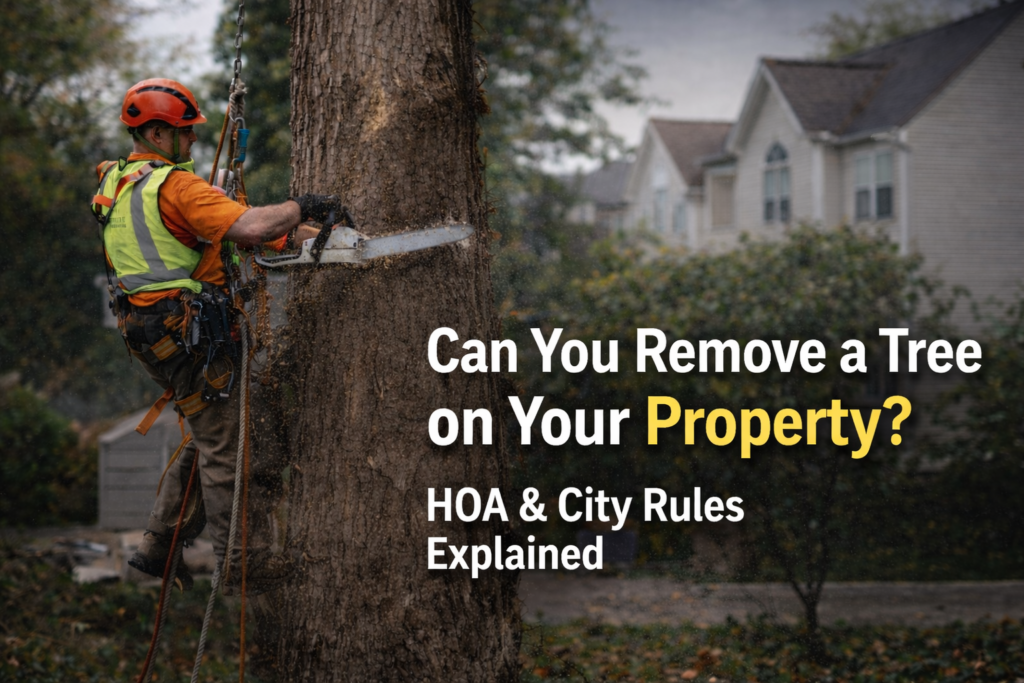
For many homeowners, trees are an important part of their landscape, providing shade, beauty, and environmental benefits. However, there may come a time when a tree becomes hazardous, diseased, or simply no longer fits your property plans. At that point, a common question arises: can I cut down a tree on my property SC? While it might seem like a simple decision, the answer often depends on several factors, including HOA tree rules, city ordinances, and potential fines for tree removal.
In South Carolina communities, tree removal regulations are designed to balance property ownership with environmental protection and neighborhood standards. Homeowners may have the right to manage trees on their property, but certain local rules can still apply. At Ryan’s Tree Services, we frequently guide homeowners through these regulations so they can make informed decisions before scheduling a removal.
Understanding how HOA policies and municipal regulations work can save you time, money, and unnecessary complications. In this guide, we explain what homeowners need to know about tree removal rules and how to determine whether you can legally remove a tree from your property.
If you’re unsure whether your tree can be legally removed, explore our trusted tree removal lancaster services and let Ryan’s Tree Services help you navigate the process safely and professionally.
Why Tree Removal Regulations Exist
Tree removal laws may seem restrictive at first, but they serve important purposes for communities. Local governments and neighborhood associations create these rules to maintain the health and appearance of residential areas while protecting environmental resources.
Trees play a critical role in urban environments. They provide shade, improve air quality, reduce stormwater runoff, and enhance property values. Because of these benefits, many municipalities implement city ordinances to regulate when and how trees can be removed.
HOA communities also establish landscaping guidelines to preserve a consistent neighborhood appearance. These HOA tree rules ensure that properties maintain the greenery and visual character that residents expect. While homeowners may own their property, these regulations help protect the overall community landscape.
Understanding Property Ownership and Tree Rights
In most situations, homeowners have the right to remove trees that are entirely located on their private property. However, ownership does not always mean unlimited removal rights. Certain trees may fall under local protection depending on their size, location, or environmental significance.
For example, a city may classify certain large trees as protected canopy trees, meaning they cannot be removed without approval. Trees located near sidewalks, streets, or public spaces may also be subject to municipal regulations. In addition, properties governed by homeowners associations must often follow specific landscaping guidelines before removing trees.
Another situation to consider is when a tree grows along a property boundary. If the trunk sits directly on the property line, the tree may be considered jointly owned by both neighbors. In those cases, both parties typically need to agree before removal can occur.
This is why homeowners frequently ask, “can I cut down a tree on my property SC?” The answer depends on both property ownership and local regulatory requirements.
How HOA Tree Rules Affect Homeowners
Many residential communities operate under homeowner associations that enforce landscaping standards. These HOA tree rules often require homeowners to request approval before making significant changes to their property, including removing trees.
The purpose of these rules is to maintain a consistent look throughout the neighborhood. Trees contribute to curb appeal and property values, so associations often regulate when and how they can be removed. Homeowners may need to submit a landscaping change request or obtain approval from an architectural review committee before proceeding.
In some neighborhoods, HOA guidelines may also require homeowners to replace a removed tree with a new one or maintain a minimum number of trees on the property. Failing to follow these guidelines can lead to HOA violations or penalties. Before scheduling any removal project, homeowners should review their association’s rules to ensure compliance. Ryan’s Tree Services often help homeowners understand these requirements and plan tree removal projects in a way that follows both HOA policies and local regulations.
City Ordinances and Tree Protection Laws
Beyond HOA guidelines, many cities enforce their own city ordinances that regulate tree removal. These laws are often designed to preserve the urban tree canopy and prevent excessive deforestation in residential areas.
City regulations may require permits for removing trees above a certain size or trees located in protected environmental zones. Some municipalities also protect historically significant or heritage trees that contribute to the character of the community. In these situations, removing a tree without permission could result in legal consequences.
Permit requirements vary from one municipality to another. Some cities allow simple online applications, while others require inspections before approval is granted. Understanding these local regulations is essential for homeowners who want to avoid unnecessary delays or penalties.
When Permits May Be Required
While not every tree removal requires official permission, certain circumstances can trigger permit requirements. Larger trees, trees located near public spaces, or trees within protected environmental areas may require approval from local authorities.
Permits are commonly required when a tree exceeds a certain trunk diameter or is considered part of a protected species. Trees located along public roadways or sidewalks may also fall under municipal oversight. In some cases, local governments may require homeowners to plant a replacement tree after removal.
Obtaining a permit usually involves submitting an application and sometimes scheduling an inspection. Working with a professional tree service can help simplify this process, as experienced companies are familiar with local guidelines and documentation requirements.
Understanding Fines for Tree Removal
Failing to follow local regulations can lead to significant financial penalties. Many municipalities impose fines for tree removal when trees are removed without proper approval.
These fines can vary depending on the size and classification of the tree. In some areas, homeowners may be required to pay hundreds or even thousands of dollars for unauthorized removal. HOA communities may also issue separate violation fees or require property owners to plant replacement trees.
Because of these potential penalties, it’s always wise to verify local rules before removing a tree. Consulting with professionals who understand the regulations can help homeowners avoid costly mistakes.
Emergency Situations and Hazardous Trees
There are certain situations where trees can be removed immediately due to safety concerns. When a tree is dead, severely diseased, or damaged by storms, it may pose an immediate risk to people and property.
In these emergency scenarios, local authorities often allow removal without a permit. Trees that threaten homes, vehicles, or power lines typically qualify for urgent removal. However, it is still a good idea to document the condition of the tree in case questions arise later.
Professional arborists can provide assessments confirming that a tree posed a safety risk and needed to be removed promptly. This documentation can be helpful if the removal is later reviewed by local officials.
Neighbor Considerations and Property Line Trees
Tree removal can sometimes create disputes between neighbors, especially when trees grow near property boundaries. Branches may extend into neighboring yards, or roots may affect fences and landscaping.
In most cases, homeowners are allowed to trim branches that extend into their property as long as the trimming does not damage the tree’s health. However, removing a tree that sits directly on a property line typically requires agreement from both property owners.
Open communication with neighbors can help avoid misunderstandings and maintain positive relationships. If a tree poses a shared safety risk, both parties may benefit from working together to arrange professional removal.
Environmental Impact of Tree Removal
Cities often regulate tree removal because trees provide valuable environmental benefits. They help improve air quality, reduce heat in urban areas, and support wildlife habitats.
In addition to environmental benefits, mature trees contribute to property value and neighborhood aesthetics. Removing too many trees can negatively impact both the ecosystem and the visual character of a community.
Because of these factors, some municipalities require homeowners to replace removed trees with new plantings. These regulations help maintain healthy tree coverage within the community.
Why Working With a Professional Tree Service Matters
Navigating HOA tree rules and city ordinances can be complicated for homeowners who simply want to improve their landscape. Professional tree services can help simplify the process.
At Ryan’s Tree Services, we help homeowners determine whether a tree can legally be removed and ensure that all work follows local regulations. Our team evaluates tree health, identifies potential hazards, and provides safe removal solutions when necessary.
Working with experienced professionals helps ensure that the project is completed safely while avoiding unnecessary legal issues or fines.
Local Tree Removal Support in Nearby Communities
Tree regulations can vary between different towns and neighborhoods, which is why working with a local service provider can make a significant difference. Companies familiar with regional guidelines are better equipped to advise homeowners about the rules that apply to their specific property.
For homeowners researching “can I cut down a tree on my property SC?” local knowledge can provide clarity and peace of mind before any work begins.
We proudly serve multiple communities across the region, if you’re nearby, learn more about our professional tree removal indian land services and how Ryan’s Tree Services can assist you.
Signs You Should Consult a Tree Expert First
Even if you believe a tree can legally be removed, consulting a professional before taking action is often the safest choice. Large trees near structures, trees close to power lines, or trees showing signs of disease may require expert evaluation.
A professional arborist can determine whether removal is necessary or whether other solutions, such as trimming or treatment, may be more appropriate. They can also help identify whether any permits or HOA approvals are required.
Getting expert advice early in the process helps homeowners avoid unnecessary risks and ensures the right decision is made for the property.
Conclusion
Removing a tree from your property isn’t always as simple as it may seem. While homeowners generally have the right to manage trees on their land, HOA tree rules, city ordinances, and potential fines for tree removal can all influence what is legally allowed.
If you’re wondering “can I cut down a tree on my property SC?”, the best approach is to verify local regulations before beginning any work. Understanding the rules can help prevent legal issues and ensure that your tree removal project is handled responsibly.
At Ryan’s Tree Services, we believe homeowners should have clear guidance when making decisions about their landscape. With professional expertise and knowledge of local regulations, we help ensure every project is completed safely, legally, and with confidence.
Need help determining your tree removal options? Contact us today and let Ryan’s Tree Services guide you through safe, compliant tree care solutions.
FAQs
1. Can I cut down a tree on my property in South Carolina?
In many cases you can, but local city ordinances and HOA tree rules may require permits or approvals before removal.
2. Do HOA rules apply to tree removal?
Yes. Many homeowner associations require approval before removing trees and may require replacement plantings
3. What are the penalties for removing a tree without permission?
Some cities impose fines for tree removal, and HOA communities may also issue penalties or require tree replacement.
4. Do I need my neighbor’s permission to remove a tree?
If the tree sits directly on the property line, both neighbors may need to agree before it can be removed.
5. Who can help determine if my tree can be removed legally?
Professional tree services like Ryan’s Tree Services can evaluate your tree and help you understand local regulations before starting the removal process.